Insider tips for Blackwall front garden makeovers with gardeners
A front garden does a lot more work than people give it credit for. It frames the house, sets the tone before anyone even rings the bell, and in a place like Blackwall it often has to balance looks, practicality, and a bit of London reality too. If you are thinking about Insider tips for Blackwall front garden makeovers with gardeners, the smartest approach is rarely the flashiest one. It is usually the one that fits your space, your daily routine, and the way the front of your home actually gets used.
In this guide, you will find the kind of advice that helps a makeover feel polished rather than cramped, long-lasting rather than fussy, and easy to maintain rather than a weekly headache. We will look at layout, planting, access, hard landscaping, seasonal upkeep, and the practical decisions that make all the difference. A lot of the best results come from small choices done well. Honestly, that is where the magic is.
Whether your front garden is a narrow strip, a modest paved area with borders, or a slightly tired space that has lost its shape over time, a good gardener can help turn it into something tidy, welcoming, and a bit more resilient. And if you want to compare services or plan the right scope of work, it helps to understand how the process works before the first shovel goes in.
Table of Contents
- Why this matters for Blackwall homes
- How a front garden makeover works
- Key benefits and practical advantages
- Who it is for and when it makes sense
- Step-by-step guidance
- Expert tips for better results
- Common mistakes to avoid
- Tools, resources and recommendations
- Law, compliance, standards and best practice
- Options, methods, and comparison table
- Case study or real-world example
- Practical checklist
- Conclusion
- Frequently asked questions
Why Insider tips for Blackwall front garden makeovers with gardeners Matters
Front gardens are not just decorative. They shape kerb appeal, influence how easy the home is to access, and can make daily life smoother in subtle ways. A neat, well-planned front space reduces visual clutter, makes paths safer, and can stop the "we'll sort that later" feeling that tends to creep in when an entry area becomes overgrown or awkward.
For Blackwall homeowners, that matters because local properties often sit within tighter urban plots, with limited room for planting mistakes. If you pick the wrong scale of planting or crowd the frontage with hard features, the garden can feel smaller fast. On the other hand, a clean layout with the right balance of greenery and structure can make even a compact space look brighter and more intentional.
There is also the everyday side of it. Wet boots, deliveries, bins, pushchairs, bikes, guests arriving on a Tuesday evening... all of that passes through the front of the house. A front garden makeover done with a gardener in mind is really about making those ordinary moments easier. Not glamorous, perhaps, but very real.
One more thing: front gardens are often the first part of a home people notice, which means they quietly affect how the property feels. That does not mean it needs to be showy. It just needs to be coherent. In our experience, coherence beats "trying a bit of everything" nearly every time.
How Insider tips for Blackwall front garden makeovers with gardeners Works
A good front garden makeover is usually a mix of planning, clearing, shaping, planting, and maintenance planning. The role of the gardener is to bring technical judgement and practical experience, especially when the site has constraints like narrow access, shade from nearby buildings, patchy soil, or a layout that has drifted over time.
Here is the basic flow:
- Assess the space. Measure the usable area, note sun and shade patterns, check drainage, and identify what currently works and what does not.
- Decide the purpose. Is the aim mostly visual improvement, better access, more planting, less maintenance, or a complete reset?
- Clear and simplify. Remove dead growth, clutter, tired edging, and anything that makes the garden feel smaller or messier than it is.
- Define the structure. Set boundaries, paths, borders, stepping stones, or focal features so the garden has a clear shape.
- Choose plants and finishes. Pick planting that suits the light, soil, and maintenance level you can realistically manage.
- Plan upkeep. Even a beautiful front garden will drift if it has no care plan attached to it.
If you are working with a professional, the best outcomes usually come when the gardener is involved early, not just at the digging stage. That is where practical advice can save you money and avoid expensive do-overs. A simple chat before the design is fixed can stop a lot of frustration later on.
It is also worth understanding the wider service picture. If your front garden makeover overlaps with clearance, hedge work, or long-term upkeep, pages like services overview and garden maintenance help you see how the pieces fit together. For a heavily overgrown space, garden clearance may be the right first step before any design work begins.
Key Benefits and Practical Advantages
The appeal of a front garden makeover is obvious enough, but the best benefits are often the ones people notice after living with the result for a few weeks.
- Better kerb appeal: The house feels more cared for, even from the pavement.
- Clearer access: A tidy path and sensible layout make coming and going smoother.
- Lower day-to-day effort: Good design can reduce the amount of constant weeding, trimming, and tidy-up work.
- More usable space: A thoughtful plan can make a small frontage feel less cramped.
- Seasonal resilience: Plants chosen for the right conditions tend to cope better through wind, shade, and dry spells.
- Better value from maintenance spend: A well-designed space is easier for gardeners to maintain efficiently.
There is also a psychological benefit that gets overlooked. A clean, balanced front garden tends to make people feel better when they arrive home. It sounds minor, but it is not. You see the front of your home more often than you think, and if it feels orderly, the whole place can feel a little calmer.
Expert summary: The strongest Blackwall front garden makeovers are usually not the ones packed with features. They are the ones where every element has a reason to be there, from the border edge to the plant height to the path width. Simple, but deliberate.
If you are comparing costs or scope, it can help to look at pricing and quotes early so you can match ideas to budget without guesswork. That is just sensible, really.
Who This Is For and When It Makes Sense
This kind of makeover suits a few different situations. Some people want a complete refresh, while others just want the front to stop looking tired. Both are valid.
You may be a good fit if:
- your front garden has become overgrown or patchy
- the path and planting feel cramped or unwelcoming
- you want a neater look without adding too much maintenance
- you are preparing a property for sale or letting
- your current layout works badly for bins, bikes, or foot traffic
- you want a more polished entrance but do not want anything overly elaborate
It also makes sense if you already know your garden is not performing. Maybe the soil is dry and thin, maybe the hedge has become a bit of a wall, or maybe the front simply lacks structure. A gardener can help you judge whether you need a light tidy-up, a planting refresh, or a broader landscaping approach.
If the design requires more structural changes, it may sit naturally alongside landscape gardening or broader landscaping work. For some homes, adding a small paved area or timber feature via decking services can create a neat transition zone. Not every frontage needs that, of course, but sometimes a little structure helps the planting breathe.
Step-by-Step Guidance
Here is a practical route to follow if you want the makeover to feel organised rather than chaotic.
- Walk the garden at different times of day. Morning shade, afternoon glare, damp corners, and windy spots all matter more than people expect.
- Make one honest list: what must stay, what should go, and what could improve but is not essential.
- Check access carefully. If materials, soil, or waste need to pass through a narrow side route, that affects the plan.
- Decide on the main job of the front garden. Is it mainly a welcome area, a planting feature, or a functional access route?
- Clear away the obvious problems first. Dead shrubs, unwanted rubble, tired containers, old edging, broken lights, and self-seeded growth can all be removed before the design phase.
- Set the hard edges. Borders, paths, and stepping zones define the shape of the space and stop it from looking accidental.
- Choose planting by behaviour, not just appearance. A plant that looks great in a pot shop may sulk in your front garden if it hates wind or shade.
- Leave breathing room. This is a big one. Overstuffed front gardens age badly.
- Plan maintenance from day one. The best-looking garden in March can become a weedy puzzle by July if upkeep was never considered.
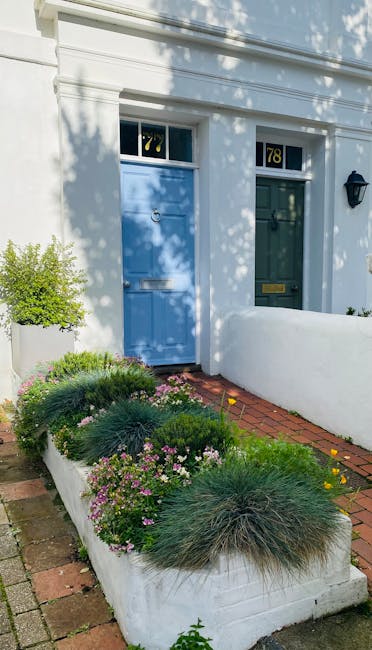
A practical example: if the frontage is narrow and north-facing, a gardener may suggest compact evergreen structure, a light-coloured path to bounce light, and a restrained planting palette. That usually works better than squeezing in lots of different textures and heights. Fewer moving parts. Less fuss. Better result.
Where hedges or tall shrubs are part of the original layout, a tidy reduction can make a huge difference. Services such as hedge trimming are often the difference between a front garden that feels enclosed and one that feels open again. If there are trees dominating the space, then tree lopping and removal may need to be considered carefully, especially where light levels or safety are affected.
Expert Tips for Better Results
These are the sort of practical tips that tend to make a visible difference, even in a relatively small Blackwall frontage.
1. Keep the planting palette tight
Three to five core plants often looks more refined than a long mixed list. Repetition creates calm, and calm creates impact. A bit of rhythm goes a long way, especially in a compact space where too many varieties can feel busy.
2. Prioritise sightlines from the pavement
People usually see the garden in motion, not from a fixed chair. Think about how the entrance reads from five or six metres away. Does the eye know where to go? Can you see the path? Is the doorway framed cleanly?
3. Use edging to make maintenance easier
Good edging is not just cosmetic. It helps stop grass creeping into borders and keeps planting zones distinct. Tiny detail, big pay-off. You will notice the difference after a few rainy weeks.
4. Leave room for growth
New planting always looks smaller than expected. That is normal. The trick is resisting the urge to fill every gap immediately. A front garden that looks slightly spare on day one can look exactly right in six months. Slightly empty now, better later.
5. Match the finish to the house
A makeover works best when materials and planting feel like they belong to the property. A neat townhouse frontage usually benefits from cleaner lines and sharper geometry. A softer terrace frontage may suit mixed planting and gentler curves. No need to overcomplicate it.
6. Build in easy access for maintenance
Can a gardener reach the back of the border without standing on plants? Can you mow, trim, or sweep without moving obstacles every time? If the answer is no, the design probably needs a rethink.
And yes, sometimes the best design choice is the boring one. That is not a criticism. It is a compliment. Boring in the sense of reliable, not dull.
Common Mistakes to Avoid
Front garden makeovers can go wrong in very predictable ways. The good news is that most of them are avoidable.
- Overplanting: Too much variety makes a small front garden feel crowded and harder to maintain.
- Ignoring shade and exposure: A sunny planting plan will struggle if the frontage is mostly shaded or windblown.
- Making access secondary: A pretty layout that is awkward to use will annoy you very quickly.
- Using too many materials: Gravel, timber, brick, slate, and multiple border styles can start fighting each other visually.
- Forgetting drainage: Waterlogging or pooling can ruin both plants and hard surfaces.
- Choosing high-maintenance plants by impulse: Beautiful, yes. Realistic for your schedule, maybe not.
- Skipping the clearance stage: Trying to design around clutter almost always limits the result.
One of the sneakiest mistakes is underestimating maintenance. A garden may look lovely after the build, then slowly unravel because no one planned for routine care. If your schedule is already full, that is a sign to keep the design simple and choose plants that can take a bit of neglect without throwing a strop.
Another common issue is treating the front garden like a rear entertainment space. The two are not the same. Front gardens need dignity, structure, and practicality first. Relaxed charm can come later.
Tools, Resources and Recommendations
You do not need a shed full of specialist equipment to improve a front garden, but a few tools and service supports make life easier.
| Need | Helpful tool or service | Why it matters |
|---|---|---|
| Overgrown or cluttered space | garden clearance | Removes the mess before design work starts |
| Routine upkeep | garden maintenance | Keeps the new layout tidy and healthy |
| Neat boundaries | hedge trimming | Prevents the front from feeling overgrown |
| Long-term turf care | lawn mowing | Supports a clean, finished appearance |
| Project planning and scope | pricing and quotes | Helps you compare options properly |
| Trust and service background | about us | Useful for understanding the team and approach |
For many homeowners, the most useful resource is simply a clear discussion with the gardener before work starts. Ask what can be kept, what should be cut back, which plants are realistic, and what the maintenance commitment will be. A good gardener will usually answer those questions plainly, without drama.
If sustainability matters to you, check how green waste and old materials will be handled. It is perfectly fair to ask about reuse, disposal, and recycling. You can also review the site's recycling and sustainability approach if you want to understand how that side of the work is managed.
Law, Compliance, Standards and Best Practice
Front garden makeovers can involve practical and sometimes safety-related decisions, especially where trees, hedges, paths, lighting, or boundary features are concerned. The exact rules depend on the property and the work involved, so it is wise to treat compliance as part of planning rather than an afterthought.
In the UK, best practice usually means:
- checking whether any trees or protected planting need special care before pruning or removal
- making sure paths and access areas are safe and not left obstructed
- using materials and methods suitable for outdoor weather exposure
- managing waste responsibly
- working with proper insurance and safety procedures where heavier or riskier tasks are involved
If the project includes elevated pruning, heavy clearance, or structural changes, ask how the work is handled safely. It is sensible to look at a contractor's health and safety policy and insurance and safety information. That is not being fussy. It is being careful, and there is nothing wrong with that.
For customer confidence and clarity around the working relationship, you may also want to review terms and conditions and payment and security. Small detail, maybe. But it helps avoid misunderstandings later.
Accessibility is another subtle but important point. A front garden should not make entering the property harder than it needs to be. If pathways, thresholds, or surface changes are part of the makeover, keep movement and visibility in mind. A good finish is one that looks good and behaves well. Both.
Options, Methods, or Comparison Table
There is more than one way to approach a front garden makeover. The right method depends on budget, the current condition of the space, and how much change you actually want.
| Approach | Best for | Pros | Trade-offs |
|---|---|---|---|
| Light refresh | Gardens that are basically healthy but messy | Lower disruption, quicker results, less cost | Won't solve deeper layout issues |
| Planting reset | Spaces that look tired or overcrowded | Big visual improvement, flexible styling | Needs careful plant selection and some upkeep |
| Structural makeover | Frontages with poor access or weak layout | Strong impact, improved flow, better definition | More planning and usually more budget |
| Full landscaping project | Properties needing both function and style upgrades | Most comprehensive result | Longest lead time, more moving parts |
In practice, many homeowners start with a light refresh and then realise the layout deserves a more structural rethink. That is normal. It is often better to step up gradually than to force a big redesign before you understand the space properly.
If the garden has a badly matched hard surface, a slippery path, or a tired border line, moving into broader landscape gardening may be the better route. If the issue is mainly neglected growth, keep it simple and begin with clearance plus maintenance. There is no virtue in overbuilding the problem.
Case Study or Real-World Example
Here is a realistic example based on the kind of work that comes up quite often.
A Blackwall homeowner had a narrow front garden with patchy gravel, an overgrown hedge, a couple of tired shrubs, and a path that felt cramped. It looked like a space that had been partially maintained for years but never really thought through. The owner did not want a dramatic design, just something clean, calm, and easier to look after.
The gardener started with clearance and pruning, then reworked the boundary line so the entrance felt more open. The planting was reduced to a small set of structure-first shrubs with a few softer seasonal plants layered in. The path was kept clear and visually stronger, and the whole frontage was made easier to maintain by simplifying the edges.
The useful part was not the size of the project. It was the judgement behind it. Less clutter. Better line of sight. A manageable planting scheme. After a week or two, the space looked brighter even on a dull morning, which matters more than people realise in a city setting.
That kind of result is exactly why working with a gardener can be so valuable. Not because the work is magical. Because someone has already seen the usual traps and knows when to leave well enough alone.
Practical Checklist
Use this before you start any front garden makeover.
- Measure the space and note where the light falls
- Check access for people, bins, bikes, and materials
- Decide whether the goal is tidy-up, refresh, or full redesign
- Identify plants or features worth keeping
- Remove clutter, dead growth, and anything broken
- Choose a small, coherent plant palette
- Make sure edging and borders are clearly defined
- Confirm how waste will be handled
- Ask how much maintenance the finished garden will need
- Review safety, insurance, and payment details before work begins
- Plan for seasonal touch-ups after the main makeover
If you want a broader starting point, the services overview is a useful place to see how the different pieces of garden work support each other. Sometimes the smartest move is to combine a few smaller services rather than chase one big fix.
Conclusion
A front garden makeover in Blackwall does not have to be elaborate to be effective. In fact, the strongest results are often modest, well-judged, and easy to live with. Clear the space properly. Shape it with purpose. Choose plants that suit the light and your maintenance habits. Keep access practical. That combination usually beats any fancy idea that looks amazing for two weeks and then becomes a chore.
What makes the difference is not just the planting or the paving. It is the thought behind the choices. A gardener who understands small urban front gardens can help you avoid wasted effort, awkward layouts, and planting that never really stood a chance. That is the insider part, really. Know the space, respect the limits, and design for the life you actually lead.
And if you are still weighing up whether to begin now or later, here is the honest answer: the right time is usually when the front starts bothering you every time you come home. That little nudge matters. It means the space is ready for attention.
Get a free quote today and see how much you can save.
When the entrance feels right, the whole home seems to breathe a bit easier. Simple as that.
Frequently Asked Questions
How much work does a front garden makeover usually need?
It depends on the starting point. Some front gardens just need clearing, pruning, and tidying. Others need layout changes, planting updates, or new edging. A good gardener will usually recommend the smallest amount of work needed to get the right result.
Can a small Blackwall front garden still make a strong impact?
Yes, absolutely. Small spaces often respond well to clear structure, a limited plant palette, and tidy edges. In a compact garden, good proportion matters more than quantity. A little restraint goes a long way.
Should I clear everything before asking for a makeover?
Not necessarily. It can help to leave the space as it is so the gardener can see what they are working with. That said, if there is obvious rubbish or severe overgrowth, a clearance phase can make planning easier.
How do I choose the right plants for the front garden?
Start with light levels, soil condition, and how much maintenance you are willing to do. Then choose plants that suit those conditions. It is usually wiser to pick reliable plants that stay tidy than to choose something dramatic that struggles in the spot.
What is the difference between garden clearance and garden maintenance?
Garden clearance is about removing overgrowth, debris, and clutter so the space can be reset. Garden maintenance is the ongoing work that keeps it looking good afterwards, such as mowing, trimming, and general tidy-up tasks.
Do I need hard landscaping for a front garden makeover?
Not always. Some gardens only need planting and cleanup. But if the path is poor, the boundaries are unclear, or the layout feels awkward, some hard landscaping may make the whole space work better.
How often will the new front garden need attention?
That depends on the design and plant choices. A low-maintenance frontage may only need light attention now and then, while a richer planting scheme may need more regular care. It is worth asking this before any work begins.
Can hedge work change the look of the whole front of the house?
Yes, very much so. A hedge that is too tall or wide can block light and make a frontage feel enclosed. Careful trimming can open the space up and improve the overall balance straight away.
What should I ask a gardener before booking the work?
Ask what they would keep, what they would remove, how they would handle waste, what maintenance the finished garden will need, and whether the plan fits your budget. A clear answer at the start saves a lot of hassle later.
Is it worth comparing quotes for a small front garden project?
Yes. Even smaller projects can vary in scope and approach. Comparing quotes helps you understand whether you are paying for a simple refresh, a more detailed design, or a larger landscaping job.
What if my front garden gets very little sun?
That is common in urban settings. Shade-tolerant planting, lighter surfaces, and careful use of height can still create a bright, tidy result. The trick is to work with the conditions rather than fight them.
How do I make sure the makeover does not become high maintenance?
Keep the design simple, avoid overcrowding, choose plants that suit the site, and plan for regular but manageable upkeep. If you want ongoing support, it may be worth arranging garden maintenance after the main work is finished.
Where can I learn more about the team and their approach?
It is usually helpful to start with the company's about us page and then review the service pages that match your project. That gives you a better sense of whether the approach feels right for your home.